

When Southern California temperatures soar past 100 degrees, the last thing any homeowner in Conejo Valley, Simi Valley, or Thousand Oaks wants is a struggling air conditioner. Understanding the most common AC problems and knowing which fixes you can handle yourself can mean the difference between a quick recovery and a miserable afternoon. In this guide, the NATE-Certified technicians at Air Force Air Conditioning & Heating walk you through the issues we see most often during peak summer heat and exactly what to do about each one.
1. Check and Replace Dirty Air Filters
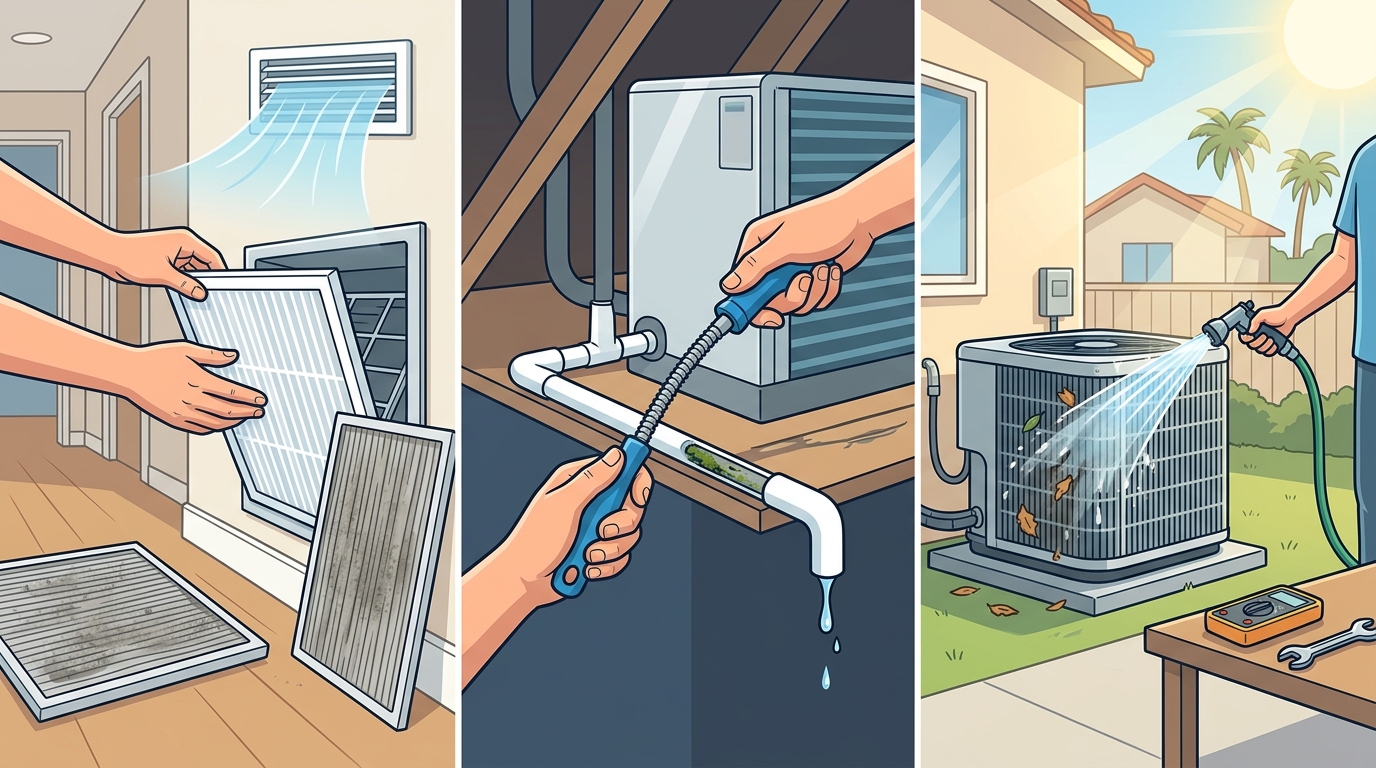
A dirty air filter is the single most common cause of AC problems during summer. A clogged filter restricts airflow, forces the system to overheat, and can cause your unit to blow warm air instead of cold. According to the U.S. Department of Energy, replacing a clogged filter can lower your air conditioner's energy consumption by 5% to 15%.
How Often to Change Your Filter
During heavy summer use, you should replace or clean your air filter every 30 to 90 days. Homes with pets or high dust levels may need monthly changes. This is the easiest and most affordable step in routine HVAC maintenance.
2. Troubleshoot Thermostat Problems
A thermostat is the control center that tells your air conditioner when to turn on and off. If it malfunctions or is placed near a window or heat source, it can read temperatures incorrectly and cause the system to short cycle or fail to maintain your set temperature.
Quick DIY Thermostat Fixes
Start by checking the batteries and replacing them if they are dead. Verify the unit is set to cooling mode at your desired temperature. If the display is blank or erratic, consider upgrading to a programmable or smart thermostat for better control and efficiency.
3. Address Frozen Evaporator Coils
An evaporator coil is the component inside your AC system responsible for absorbing heat from indoor air. When airflow is restricted by dirty filters or blocked vents, the coil temperature drops below freezing and ice forms on the surface. A frozen coil cannot absorb heat, which leads to warm air circulating through your home.
What to Do If Your Coils Freeze
Turn off the AC and switch the fan to "on" to help thaw the ice. Check your air filter and all supply vents to make sure nothing is blocked. If freezing recurs, the problem may involve low refrigerant or a failing blower motor, and you should schedule professional AC repair right away.
4. Identify Refrigerant Leaks
Refrigerant is the chemical compound that cycles through your AC system to transfer heat from indoors to outdoors. If your system is low on refrigerant due to a leak, it will struggle to cool your home and may cycle on and off frequently. Signs include hissing sounds near the outdoor unit, ice on the refrigerant lines, and rising energy bills.
Refrigerant handling requires EPA certification, so this is never a DIY job. Contact the emergency repair team at Air Force AC & Heating if you suspect a leak.
5. Clean the Outdoor Condenser Unit
Your condenser unit sits outside and releases heat from your home to the outdoor air. When it becomes covered in leaves, dirt, or debris, the heat exchange process slows down and your AC works harder than it should. According to HVAC industry data, a shaded and clean outdoor unit can run 5% to 10% more efficiently.
How to Clean the Condenser
Turn off the unit, then gently clear away debris. Spray the coils with a standard garden hose. Never use a pressure washer. Keep at least two feet of clearance around all sides of the unit for proper airflow.
6. Diagnose Strange AC Noises
Unusual sounds from your air conditioner are early warning signs of mechanical problems. Rattling or banging often means loose internal parts. A buzzing noise can point to electrical issues. Grinding sounds may indicate worn motor bearings, while a hissing noise could signal a refrigerant leak.
If you hear any persistent noise beyond normal operation, it is best to turn off the system and call a licensed technician. Continuing to run a damaged unit risks compressor failure, which is the most expensive AC repair. Learn more about our Thousand Oaks air conditioning repair services.
7. When to Call a Professional
Some tasks like filter changes and thermostat checks are safe for homeowners. However, electrical work, refrigerant handling, and component replacement require a licensed HVAC professional for safety and legal compliance. If your AC keeps tripping the circuit breaker, runs constantly without cooling, or is more than 10 to 15 years old, it may be time to consider a full system replacement.
| Problem | DIY Fix | Professional Repair Needed | Typical Cost Range |
|---|---|---|---|
| Dirty air filter | Yes | No | $5 - $30 |
| Thermostat malfunction | Battery swap only | If wiring issue | $150 - $500 |
| Frozen evaporator coil | Thaw and check filter | If recurring | $200 - $700 |
| Refrigerant leak | No | Yes (EPA certified) | $200 - $1,500 |
| Dirty condenser coils | Light cleaning | Deep cleaning | $75 - $250 |
| Strange noises | Check for loose cover | Yes | $150 - $600 |
| Compressor failure | No | Yes | $1,500 - $4,000 |
Key Takeaways
- Replace your air filter every 30 to 90 days during summer to prevent most common AC issues.
- Check thermostat settings and batteries before assuming your AC unit is broken.
- A frozen evaporator coil usually starts with restricted airflow from dirty filters or blocked vents.
- Never attempt to handle refrigerant yourself. It requires EPA certification.
- Keep your outdoor condenser unit clear of debris with at least two feet of clearance on all sides.
- Strange noises like grinding, buzzing, or hissing warrant an immediate call to a licensed HVAC technician.
- Regular preventive maintenance from NATE-Certified professionals is the best way to avoid emergency breakdowns.
Frequently Asked Questions
Why is my AC running but not cooling on a hot day?
The most likely causes are a dirty air filter, low refrigerant levels, or a dirty condenser unit. Start by checking and replacing the filter, then inspect the outdoor unit for debris. If neither solves the problem, contact a professional for diagnosis.
How often should I service my air conditioner in Southern California?
Schedule professional maintenance at least twice per year, in spring and fall. Spring service prepares your system for the intense Ventura County and San Fernando Valley summer heat.
Can I fix a refrigerant leak myself?
No. Refrigerant handling is regulated by the EPA and requires certified technicians. Attempting a DIY repair can be dangerous and is illegal without proper credentials.
What temperature should I set my thermostat in summer?
The recommended setting is 78 degrees Fahrenheit for a balance of comfort and energy efficiency. Each degree lower increases energy consumption by approximately 6% to 8%.
How do I know if my AC needs repair or replacement?
If your system is over 10 to 15 years old, requires frequent repairs, or your energy bills keep rising, replacement may be more cost-effective. Explore your options on our AC replacement page.
Why does my AC keep tripping the circuit breaker?
Common causes include an overloaded circuit, dirty condenser coils, or a malfunctioning compressor. Reset the breaker once. If it trips again, turn the system off and call a technician immediately.
Is it normal for my AC to run all day during a heat wave?
It is normal for an AC to run more frequently during extreme heat, but it should still cycle off periodically. If it runs nonstop without reaching the set temperature, there may be an underlying issue.
Schedule Your Summer AC Tune-Up Today
Do not wait for a breakdown on the hottest day of the year. Air Force Air Conditioning & Heating has served Ventura, Los Angeles, and Santa Barbara Counties since 2012 with honest, reliable HVAC service. Our NATE-Certified technicians are ready to diagnose, repair, or replace your system. Contact us today to schedule your appointment and keep your home cool all summer long.